
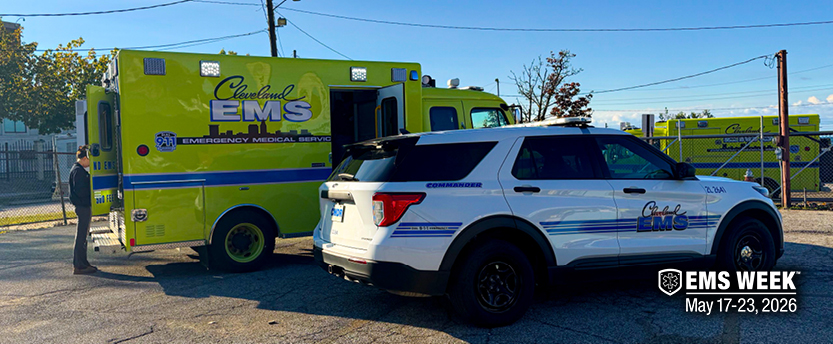
In conversations with Dr. Jeremiah Escajeda, Medical Director for Cleveland EMS, Commissioner Orlando Wheeler, and Commander Ellen Kazimer, a shared vision emerged. Cleveland EMS is building a system grounded in innovation, prevention, education, clinical excellence, and sustained community trust.
That vision is already reflected in daily operations across the organization.
Moving EMS Beyond Response
Dr. Escajeda described a clear shift in EMS toward prevention and community-based care. “We’re going to see EMS move more toward preventative medicine,” he said, pointing to community paramedicine and mobile integrated health as central to the future.In Cleveland, that shift is already underway. Outreach teams now follow up after 911 calls, connect frequent users to care, and support residents facing chronic illness, substance use disorder, housing instability, or limited access to primary care.
Commissioner Wheeler noted that this work is closing a long-standing gap in continuity of care. “EMS is no longer only responding in the moment,” he said. “It is helping address what happens next, and that continuity is what builds trust in the community.”
Innovation That Changes Outcomes
Cleveland EMS has introduced several clinical advancements that are already improving care in the field. One of the most significant is the whole blood program, which allows paramedics to administer blood to patients in hemorrhagic shock before hospital arrival. Cleveland EMS became the first major city in Ohio to deploy the program, now expanded across all field captain vehicles.
Dr. Escajeda called it a major step forward in prehospital medicine. “The earlier we can intervene with definitive care, the better chance we have to change the outcome,” he said. “Whole blood gives us the ability to begin lifesaving treatment before the patient ever reaches the emergency department.”
Commander Kazimer noted that innovations like this only succeed when they are supported by strong training and culture in the field. “These advancements raise the level of care we can provide, but they also depend on consistency, preparation, and Clinicians who are confident in applying them under pressure,” she said.
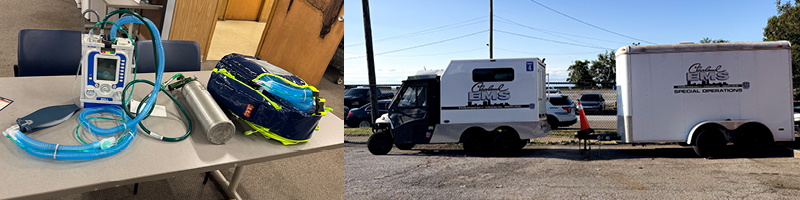
Additional advancements include field ventilators, video-assisted intubation, automated CPR devices, and expanded research partnerships focused on critical care outcomes.
Commissioner Wheeler said these changes reflect more than new tools. “We’re changing the mindset of what EMS can be,” he said. “This is about building a system that delivers higher levels of care, supports our Clinicians, and improves outcomes for those we serve.”
A System Built on Community Connection
Cleveland EMS is expanding its role in community health through proactive engagement and follow-up care. Commissioner Wheeler described biweekly call reviews and outreach efforts focused on frequent 911 callers. These efforts connect individuals to resources such as insurance support, healthcare navigation, elder services, and substance use treatment programs.“We realized that many calls are tied to larger issues that won’t be solved in a single emergency response,” Wheeler said. “If we can connect people to support systems before the next crisis, we can improve outcomes medically, personally, and socially.”
The agency also conducts outreach in shelters and community spaces to ensure individuals experiencing homelessness continue to receive care. Follow-up after EMS calls is now a standard part of operations, reinforcing that care does not end at the scene.
Culture, Trust, and Clinical Excellence
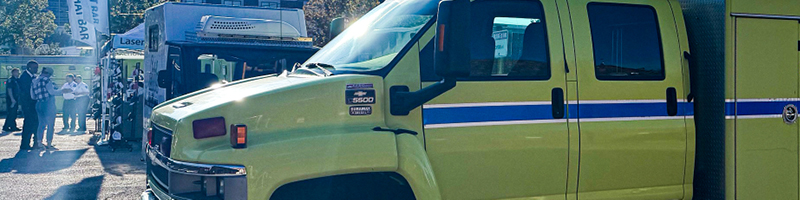
Across Cleveland EMS, culture is central to how care is delivered and how the system evolves. Commander Kazimer emphasized that trust is built through every interaction. “People remember how you made them feel on their worst day,” she said. “Trust is earned through every interaction, every decision, and every moment of care.”
That expectation shapes how EMS is defined internally. It is viewed as a calling rooted in accountability, compassion, and clinical excellence, reinforced through rigorous training, continuing education, and ongoing professional development.
Dr. Escajeda highlighted the human responsibility behind that standard. “We see people in some of the hardest moments of their lives, sometimes more than once,” he said. “Our responsibility is to show up with consistency, empathy, and clinical excellence every time.”
Commissioner Wheeler connected that culture to organizational performance. “What makes Cleveland EMS strong is that everyone from the field to leadership is working toward the same mission,” he said. “That alignment is what allows us to innovate while staying grounded in patient care.”
Together, these perspectives reflect a system in which culture is not separate from care, but rather what enables it.
Celebrating 50 Years, Building the Next Model of EMS
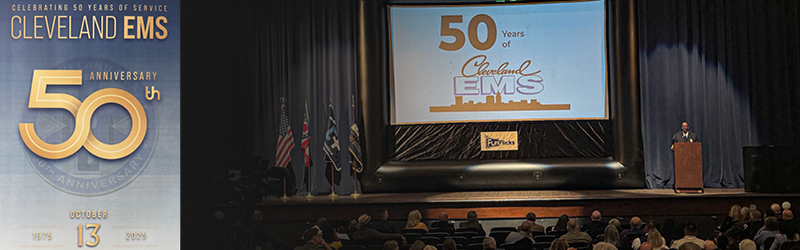
In October 2025, Cleveland EMS marked 50 years of service. Leadership is now focused on the next phase of evolution, including expanded telehealth capabilities and treat-in-place models designed to reduce unnecessary transport.
“We’re looking at how we evolve the system, so care doesn’t always have to start and end in the back of an ambulance,” Wheeler said. “If we can safely treat patients in place or connect them to the right level of care sooner, we improve the experience for patients and strengthen the system.”
The goal remains consistent in delivering the right care in the right place at the right time.
Redefining What EMS Can Be
Cleveland EMS is not simply adapting to change, it is helping define it. Through clinical innovation, community medicine, rigorous training, and a growing focus on prevention, the agency is reshaping what emergency medical services can look like in a modern healthcare system.It is no longer defined only by response. No longer limited to transport.
It is emerging as a trusted, community-connected healthcare partner focused on improving outcomes long before and long after the 911 call ends.
About the National Registry of Emergency Medical Technicians
Guided by our mission to support the EMS profession through partnerships, research, and lifelong assessment of clinical competence, the National Registry was established in 1970 as a non-profit organization and serves as the Nation’s Emergency Medical Services certification organization. It is accredited by the National Commission for Certifying Agencies (NCCA), the accreditation body of the Institute for Credentialing Excellence. The National Registry maintains NCCA accreditation for each of the four certification programs: Emergency Medical Responder (NREMR), Emergency Medical Technician (NREMT), Advanced Emergency Medical Technician (NRAEMT), and Paramedic (NRP). Credentialing protects the public, assures consumers that Clinicians have met standards of practice, advances the EMS profession, and establishes standards of professional knowledge, skills, and practice. Additional information is available at NREMT.org, and BlueSky, TikTok, Facebook, Instagram, LinkedIn, Reddit, and YouTube.
Media Contact:
Kelly Schroeder
Manager of Integrated Content & Communications
kschroeder@nremt.org