
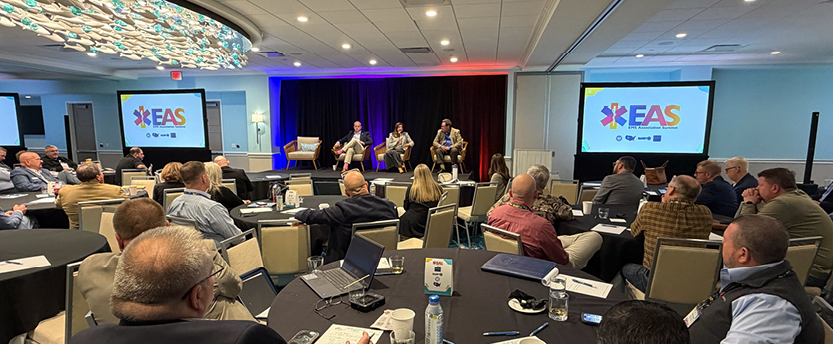
Attendees participated in sessions on workforce resilience, operational efficiency, advocacy, regulatory updates, innovations in critical care, and more. Beyond formal programming, mixers, happy hours, and structured networking created opportunities for leaders from different EMS associations to connect, forge new relationships, and lay the groundwork for partnerships extending well beyond the summit.
The summit was designed and hosted by the National Registry of EMTs (National Registry), the National Association of Emergency Medical Technicians (NAEMT), the American Ambulance Association (AAA), and the State EMS Association Networking Group, providing a national platform to strengthen the profession’s collective voice and drive meaningful progress.
“This was about more than a conference. It was about creating one voice for the EMS profession,” said Bill Seifarth, executive director and CEO of the National Registry. “When we speak together, our credibility increases, our influence expands, and our ability to drive meaningful change becomes far more powerful.”
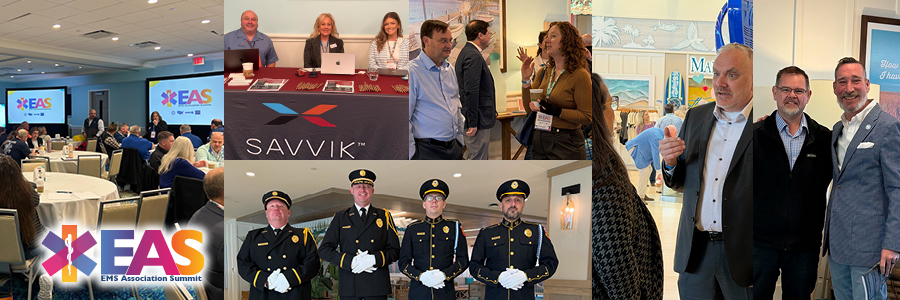
The summit opened with a coordinated welcome from national leaders, including AAA President Jamie Pafford-Gresham, NAEMT President Chris Way, and National Registry Board Chair Dr. Scott Gilmore, followed by greetings from the state host, Chrissy Bartel, president of the Kansas EMS Association. The Kansas City Fire Department presented the colors for the Pledge of Allegiance, establishing a meaningful and ceremonial start.
Leaders emphasized that while each association carries its own mission, coming together around shared priorities creates something bigger than any one organization can achieve alone. Throughout the summit, participants engaged in keynotes, breakout sessions, and roundtables, openly sharing successes, challenges, and lessons learned. Discussions connected everyday EMS practice to the profession’s core values and long-term vision.
State EMS associations were recognized as essential drivers of national progress, addressing workforce stress, funding gaps, and Clinician wellbeing while advancing meaningful advocacy. Speakers reinforced that coordinated messaging and strong partnerships are essential to strengthening influence across legislation, operations, financial sustainability, and public trust, ensuring the EMS profession moves forward with clarity and purpose.
Adding a unique perspective, attendees enjoyed a special screening of Code 3, followed by a meet-and-greet with co-writer Patrick Pianezza, blending real-world EMS storytelling with inspiration and laughter.
By the conclusion of the summit, participants had formed new relationships, discovered fresh approaches, and strengthened partnerships that will shape policy, governance, and operational change in EMS for years to come. This momentum is expected to carry into upcoming national initiatives, including EMS on the Hill, March 25–26, in Washington, D.C.
The inaugural EMS Association Summit set a new standard for national collaboration. It was a platform to learn, innovate, and build unity, leaving participants with a renewed sense of purpose and excitement for the EMS profession’s future. Planning for the 2027 summit is already underway, with the EMS community poised to move forward united, with a clear purpose, a powerful voice, and the organization to make real impact.
If you are interested in learning more about the 2027 EMS Association Summit, sign up for information and updates.
Media Contact:
Kelly Schroeder
Manager of Integrated Content & Communications
kschroeder@nremt.org
Guided by our mission to support the EMS profession through partnerships, research, and lifelong assessment of clinical competence, the National Registry was established in 1970 as a non-profit organization and serves as the Nation’s Emergency Medical Services certification organization. It is accredited by the National Commission for Certifying Agencies (NCCA), the accreditation body of the Institute for Credentialing Excellence. The National Registry maintains NCCA accreditation for each of the four certification programs: Emergency Medical Responder (NREMR), Emergency Medical Technician (NREMT), Advanced Emergency Medical Technician (NRAEMT), and Paramedic (NRP). Credentialing protects the public, assures consumers that Clinicians have met standards of practice, advances the EMS profession, and establishes standards of professional knowledge, skills, and practice. Additional information is available at NREMT.org, and BlueSky, TikTok, Facebook, Instagram, LinkedIn, Reddit, and YouTube.