
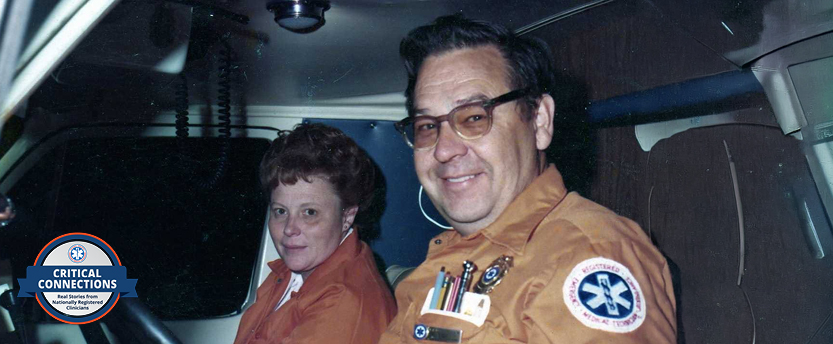
Most children grow up playing in the backyard or on a playground. David Burkham grew up in an ambulance garage.
Long before he earned his EMT certification or even learned to drive, he was surrounded by oxygen tanks, stretchers, and the steady hum of ambulance radios. While other children learned family traditions around the dinner table, Burkham learned his by watching his parents care for neighbors during some of the worst moments of their lives.
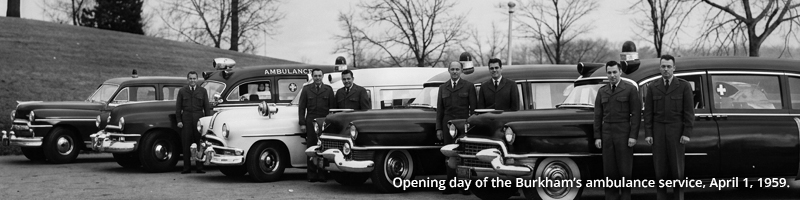
"My parents founded the ambulance service in 1959," Burkham said.
That service, based in Decatur, Illinois, became the first ambulance service in Macon County. At a time when many communities still relied on funeral homes to transport patients, Burkham's parents were helping shape what modern EMS would become.
For David, none of it felt unusual. "I was going in the garage with oxygen tanks and different things from a young age," he said. "It was simply home."
By 13, he was riding along on ambulance calls with an American Red Cross Standard First Aid card tucked into his pocket. He wasn't making life-and-death decisions yet, but he was there to help lift patients, carry equipment, and learn. "I mainly just went to help lift," he said. "But I learned a lot doing that."
At 16, before he even had a driver's license, Burkham became an EMT. He spent his high school and college years working on the family ambulance, gaining an education few classrooms could provide.
Then came another influence. Like many EMS Clinicians of his generation, Burkham was captivated by the television series Emergency! Unlike most viewers, however, he wasn't imagining what life on an ambulance might be like, he was already living it. "Between what I was learning in real life and what I was seeing on TV, I knew that was where I wanted to be," he said.
Lessons That Last a Lifetime
The Burkham family business was never just about operating ambulances, it was about caring for a community.
David's father taught him how to prepare the ambulance, respond to calls, and always be ready for whatever came next. His mother, a registered nurse who specialized in critical care transport, instilled an equally important lesson: the importance of precision and attention to detail. "She was a perfectionist," Burkham said, and together, they shaped the way he approached every patient and every call.
Growing up in a family ambulance service also meant understanding that emergencies do not wait for convenient moments. "We were always subject to being called away, whatever you were doing," Burkham said.
Family plans changed without warning, but helping others came first. The family service covered approximately 525 square miles throughout Macon County and neighboring communities. "We ran everywhere," Burkham said.
Finishing What He Started
Although EMS had already become part of his identity, Burkham faced an important decision while he was in college. Halfway through his degree program, he considered leaving school to enroll in paramedic training. Before he made the leap, his Medical Director pulled him aside with some advice.
"He said, 'Don't do that. Paramedic school will always be here, but if you quit college now, you'll never go back.'" Burkham listened and stayed in school. Years later, he still considers it one of the best decisions he ever made. "He was right," Burkham said.
Looking back, the experience reinforced a lesson he had learned throughout his life, that sometimes the best decisions come from listening to those who have already walked the path before you.
Service Finds the Next Generation
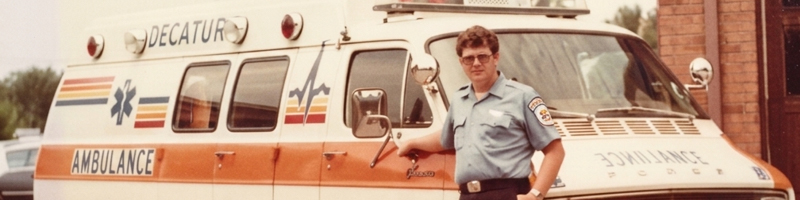
The family's connection to EMS naturally became part of David's own family. When he met his wife Becky, she already understood emergency response from a different perspective. She worked as a dispatcher while David responded in the field.
Their first date reflected the life they would build together. "He asked if I wanted to ride along," Becky said with a laugh. "I said, 'Sure, why not?'" For many couples, a first date means dinner and a movie. For the future Burkhams, it meant climbing into an ambulance.
Working in dispatch gave Becky an appreciation for the challenges EMS families face. She heard the calls, knew where responders were headed, and understood the uncertainty that accompanied every emergency. "I always knew where he was going," she said.
Their family life often revolved around the next call. Plans changed, schedules shifted, and emergencies took priority. "You respond not only for your community, but also to help your fellow workers carrying the load," Becky said.
The next generation followed naturally. David's daughter began riding along on ambulance calls and quickly discovered the same passion for EMS. Her husband was already a firefighter when they met, and together they encouraged one another to continue growing in emergency services.
Today, she serves as an emergency department nurse. Her husband is a career firefighter and paramedic. Watching them choose careers centered on helping others has been one of Burkham's greatest rewards. When asked what values carried through three generations, his answer was simple.
"Do the best basic care you can do. Try to provide the best service."
Those lessons were never written on a wall somewhere. They were learned by example.
You Never Stop Being EMS
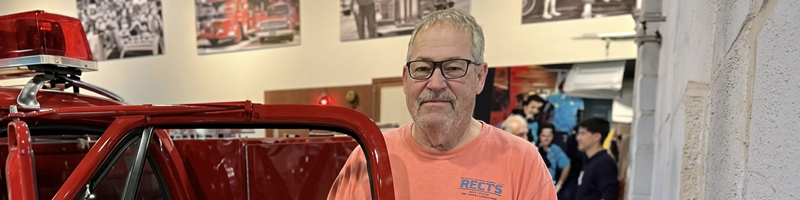
Retirement may have ended David's career, but it did not change the way he sees the world. "I'm glad to be retired," he said with a chuckle, but neither he nor Becky believes someone truly retires from EMS. "Even though we're retired, no matter where we go, if there's ever a situation, we're still able to figure out how to respond," Becky said.
She has watched David instinctively step in to help strangers during emergencies, including assisting someone who was choking in a restaurant. Their daughter and son-in-law have done the same, stopping at serious crashes while driving through southern Illinois.
They never questioned whether they should stop, they simply did. "Whatever you can give or whatever you can assist with, you're going to do it no matter what," Becky said.
David agreed. "If you see something happen, try to go over and take care of it," he said. "It was a lifelong thing with me."
That instinct is difficult to explain to someone outside the profession, but it becomes part of who you are. Even now, Becky catches herself thinking like a dispatcher, mentally organizing information for responding crews whenever she comes upon an incident. David still instinctively evaluates scenes, patients, and priorities. Years of service have become second nature.
A Legacy Bigger Than One Ambulance
The Burkham family eventually sold its ambulance service in 2018 after more than six decades of serving Macon County. David had hoped the service his parents built would continue under new ownership, making its eventual closure especially difficult.
Still, he understands that a legacy is not measured by the name painted on the side of an ambulance. It lives in the people who continue answering the call, including the daughter and son-in-law who have built careers of their own. Perhaps one day, Burkham said with a smile, that legacy will continue through a granddaughter who is already growing up surrounded by the same dedication that shaped generations before her.
Looking back, Burkham believes one of the biggest misconceptions about EMS is that success is measured only by lives saved. Early in his career, one of his instructors reminded him that no EMS Clinician can save every patient, but what they can do is provide the best possible care, offer compassion during someone's worst moment, and give every patient the greatest chance possible until they reach definitive treatment.
That lesson has guided three generations of the Burkham family, and for more than 65 years, beginning with a small ambulance service in Decatur, that philosophy has shaped the way they have cared for their community.
For them, EMS has never been just a career. It has never been confined to a shift, a station, or even a retirement date. It is a calling that has been passed from one generation to the next, rooted in compassion, strengthened by family, and carried forward with every patient they serve.
For the Burkhams, the call never truly ends.
About the National Registry of Emergency Medical Technicians
Guided by our mission to support the EMS profession through partnerships, research, and lifelong assessment of clinical competence, the National Registry was established in 1970 as a non-profit organization and serves as the Nation’s Emergency Medical Services certification organization. It is accredited by the National Commission for Certifying Agencies (NCCA), the accreditation body of the Institute for Credentialing Excellence. The National Registry maintains NCCA accreditation for each of the four certification programs: Emergency Medical Responder (NREMR), Emergency Medical Technician (NREMT), Advanced Emergency Medical Technician (NRAEMT), and Paramedic (NRP). Credentialing protects the public, assures consumers that Clinicians have met standards of practice, advances the EMS profession, and establishes standards of professional knowledge, skills, and practice. Additional information is available at NREMT.org, and BlueSky, TikTok, Facebook, Instagram, LinkedIn, Reddit, and YouTube.
Media Contact:
Kelly Schroeder
Manager of Integrated Content & Communications
kschroeder@nremt.org